Autopilot does not mean autonomous driving
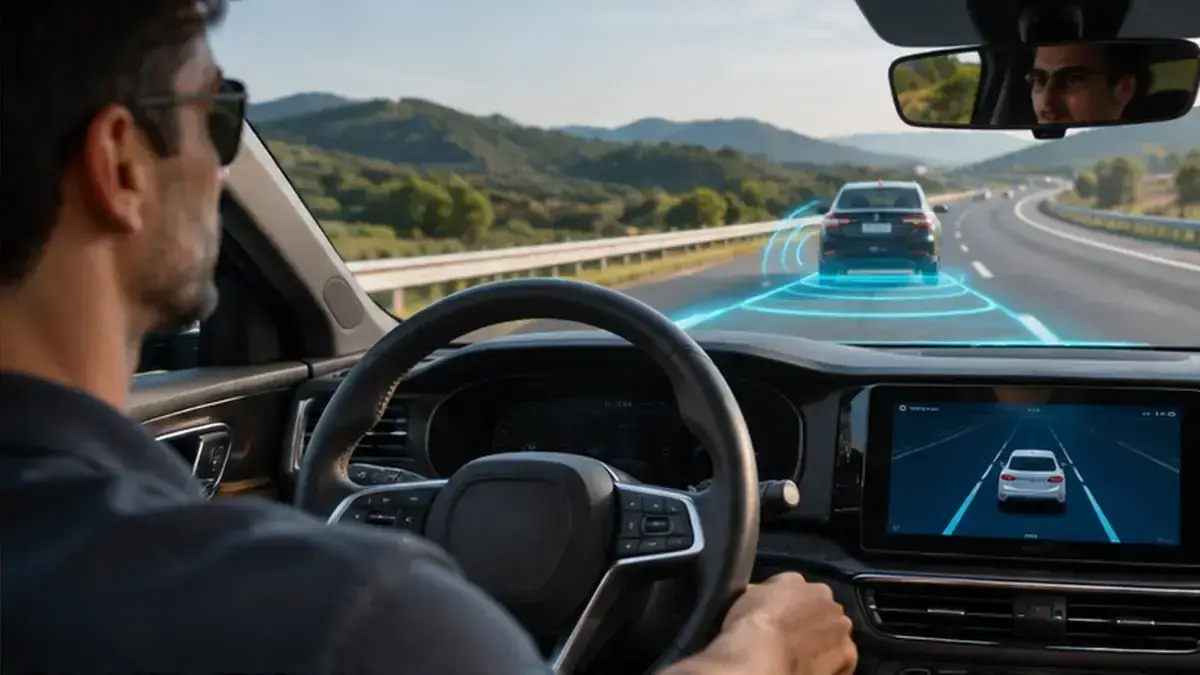
A car that steers and adjusts speed may still require constant human supervision.
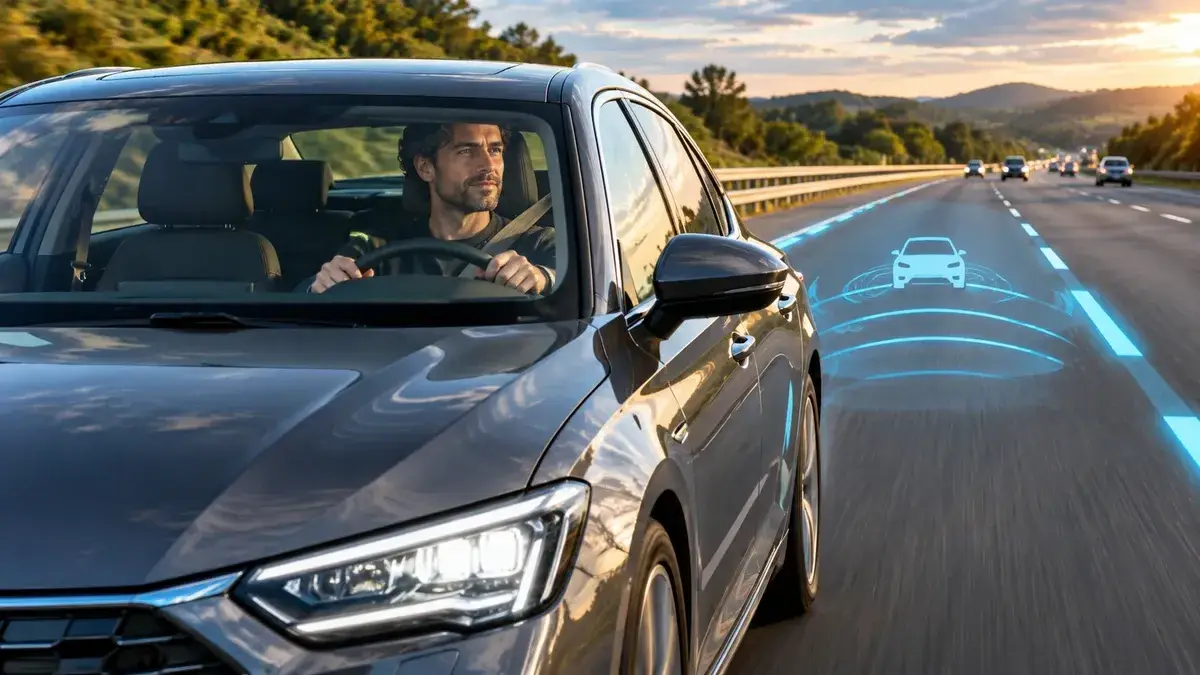
The car adjusts speed to follow traffic and makes small steering corrections. From the driver's seat, the experience may resemble a vehicle that is driving itself. Yet the appearance of automation is not the same as responsibility for the driving task. Marketing terms such as 'autopilot' and 'highway assistant' do not tell a buyer, by themselves, what the vehicle can safely do or whether a person may stop watching the road.
Driver assistance and automated driving are different
The SAE J3016 framework distinguishes systems by which parts of the driving task they perform and what the human must still do. A collision warning or automatic emergency braking can act briefly without taking over driving. Adaptive cruise control can manage following distance by adjusting speed. Lane-centering assistance can support steering. Combining two useful functions does not automatically turn the vehicle into a self-driving car. Each feature has an intended use and a set of operating limits.
What Levels 0, 1 and 2 mean
At Level 0, the human drives while technology may warn or intervene momentarily. Level 1 offers continuous support for either steering or speed, not both together. Level 2 can support steering and speed simultaneously in defined conditions. The critical point is the human role: at Levels 0 through 2, the person remains the driver, must continuously monitor the environment and must be ready to respond. Taking your feet off the pedals for a while does not mean attention can leave the road, and supervision never becomes optional simply because the vehicle maintains its lane.
Level 3 changes who monitors the road
When a Level 3 automated system is engaged within its operational design domain, it performs the complete dynamic driving task, including monitoring the environment. The human must remain available to resume driving when the system requests a takeover. That differs fundamentally from Level 2, where continual supervision is required. Level 3 capability cannot be inferred merely from the presence of cameras, radar or a software update. Its specific feature, operational conditions and jurisdictional authorization matter.
The distinction between Levels 4 and 5
A Level 4 system can perform the driving task and manage a fallback within a defined domain: perhaps a restricted service area, a limited range of speeds or specified weather. It does not have to operate on every road. Level 5 describes automation that could perform all driving tasks under every condition in which a human can drive, with no human driver needed. These levels define roles and capabilities, not a guarantee that every advertised service is available or that all situations are risk-free.
Operating conditions determine the boundaries
Heavy rain, snow, faded lane markings, road works, glare, dirty sensors and unexpected obstacles may limit a driver's assistance feature. A system that performs smoothly on a well-marked motorway may behave differently in a complex city street. The US National Highway Traffic Safety Administration emphasizes the distinction between Level 2 advanced driver-assistance systems and automated driving systems. Promotional demonstrations cannot replace the operating manual, product warnings or attention to the actual road.
Overtrust may become a safety problem
The more comfortably a car handles routine journeys, the easier it is to assume it can solve every surprise. Drivers may be tempted to use phones or disengage mentally. Driver monitoring and alerts can help, but they do not turn Level 2 assistance into independent driving. Unusual obstacles, missed markings or unpredictable behavior by other road users still require human judgment. A capable driver needs to know how to disengage the system, regain control and recognize situations where it should not be used.
Questions to ask before activating a feature
Consult the manual for the exact vehicle version, not just the product name. Check the supported automation level, countries, road types, speeds and weather limitations. Determine whether the feature alerts, supports one control dimension or continuously supports both steering and speed. Learn which warnings require action and whether recent software changes have altered the behavior. Never deliberately test safety limits on a public road. Explain the limitations to anyone else who will drive the car.
Responsibility is more useful than a label
Asking whether a vehicle 'has autopilot' is less precise than asking who monitors traffic, who decides when the system can be used and who must respond when it fails. Assistance can make some tasks easier, but it does not authorize distraction or guarantee safety. Buyers should distinguish support from automation and understand the role assigned to the human at the actual level in use.
Frequently asked questions
Can a Level 2 car steer without my hands?
Some features can steer under defined conditions, but the human remains responsible for constant supervision and timely intervention.
Is Level 3 simply Level 2 with more sensors?
No. The defining difference concerns who performs the complete driving task while the system is active.
Does the word 'autopilot' prove self-driving capability?
No. Marketing labels do not replace technical classifications or manufacturer limits.