How to Know Whether You Actually Understand Something
Recognition can feel like understanding until you try to explain, apply or challenge an idea.
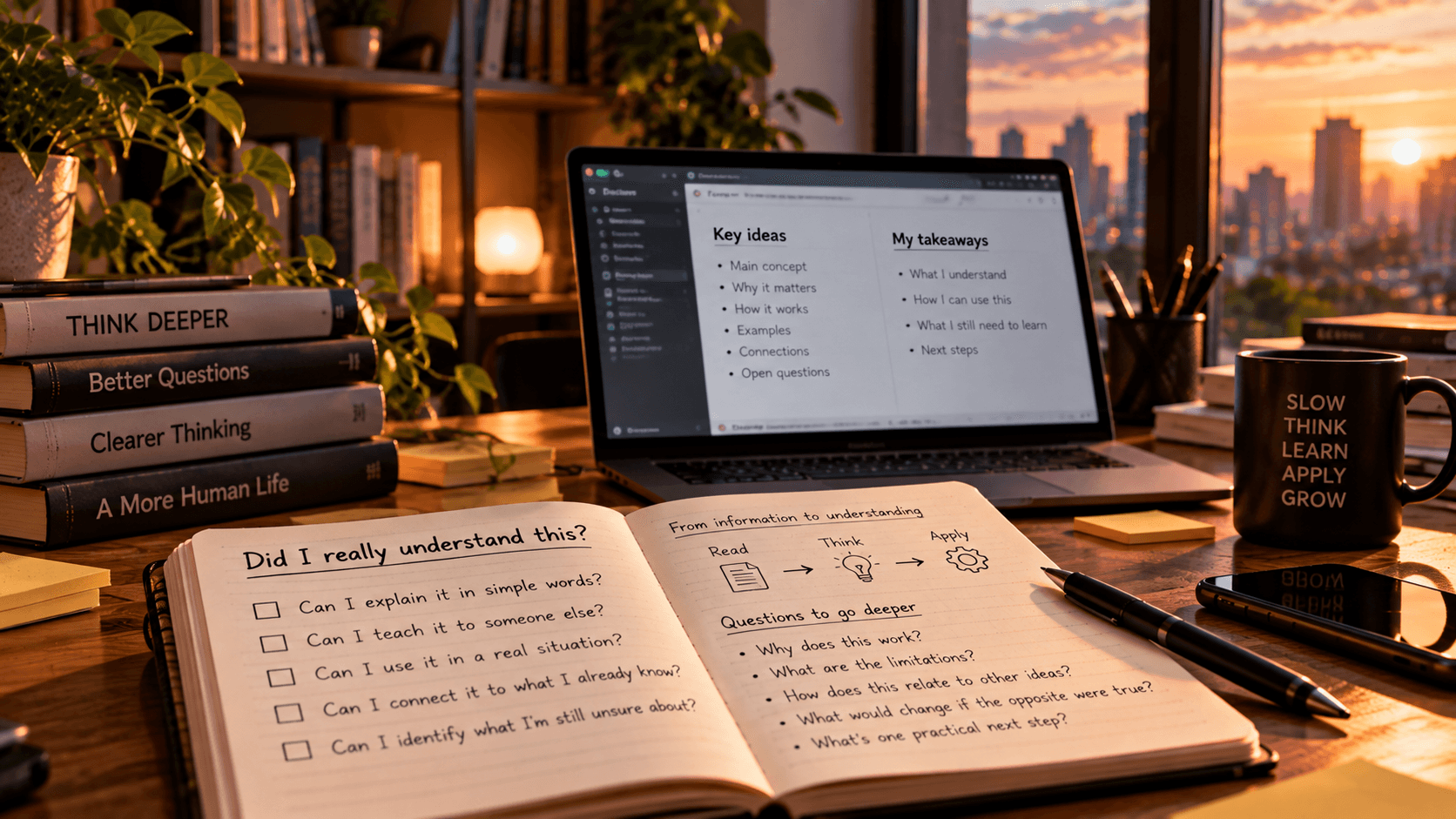
A useful idea is not valuable only because it sounds right. Its value appears when it changes how we see, decide or act.
The challenge is creating enough distance from automatic habits to notice what is actually happening.
Recognition is deceptive
Reading a clear explanation creates familiarity. When the words make sense on the page, it is easy to conclude that the idea now belongs to us. Close the book or tab, however, and the structure can disappear surprisingly quickly.
Explain without the source
Try to explain the concept in plain language without looking at the material. Where you become vague, circular or dependent on jargon, you have found a useful learning gap.
Transfer the idea
Understanding becomes stronger when an idea works outside the example in which you learned it. Apply it to a new problem, compare it with a different situation or use it to make a prediction. Transfer tests whether you learned a pattern rather than memorized a demonstration.
Find the boundary
Ask when the idea stops working. What assumptions does it require? What would contradict it? Understanding the boundary prevents useful concepts from becoming slogans applied everywhere.
Build retrieval into learning
Do not only reread. Periodically retrieve ideas from memory, explain them, solve something with them and revisit what failed. Learning becomes more durable when the mind must reconstruct knowledge instead of merely recognizing it.
From our library

João: An Ordinary Man, A Simple Life
A moving literary portrait of an ordinary man whose quiet choices, family bonds, work, and constancy reveal the extraordinary weight of a simple life.
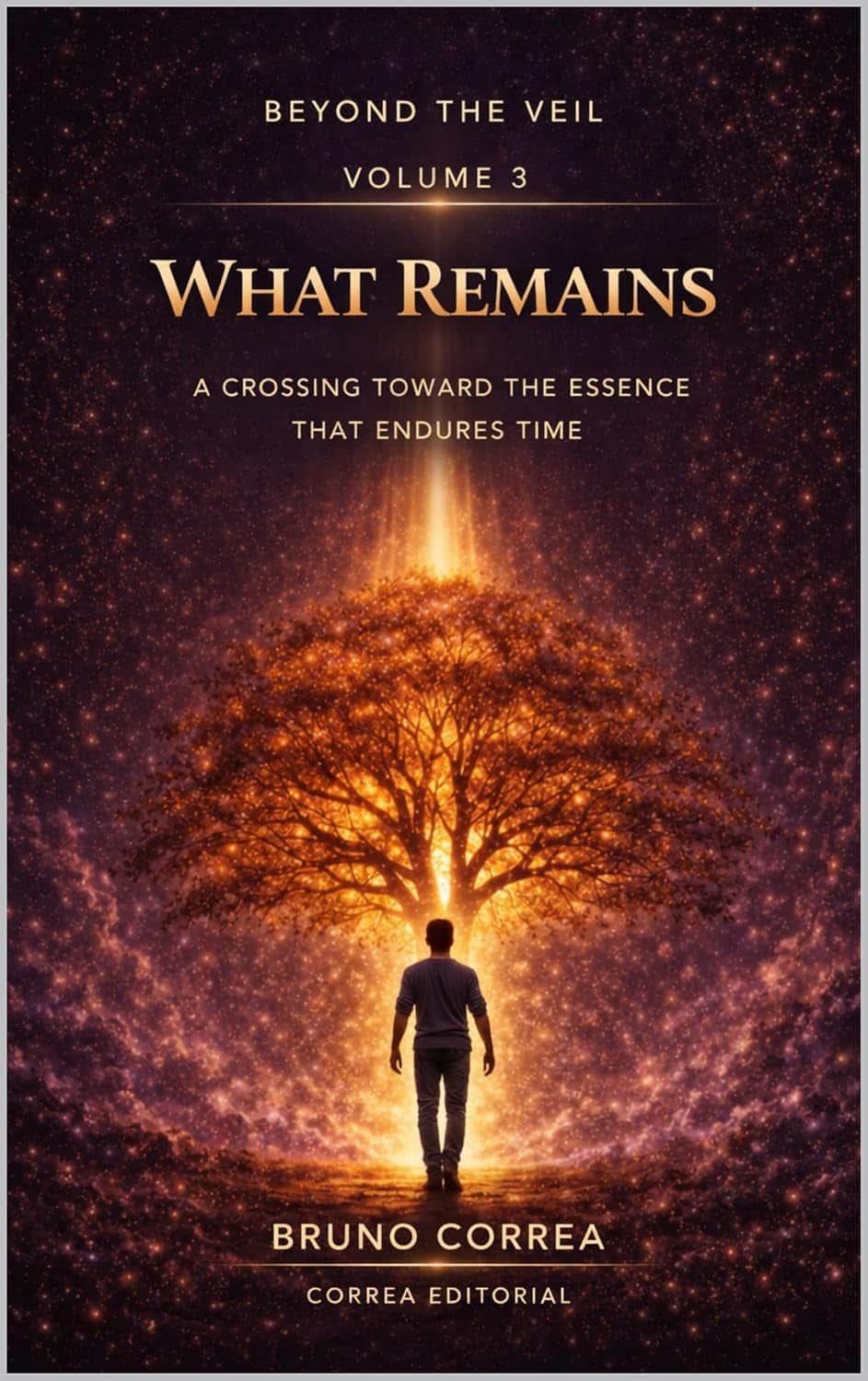
What Remains: A Crossing Toward the Essence That Endures Time
A philosophical journey toward what remains when noise, roles, urgency, and the need for control begin to fall away.
Keep exploring

The Skill of Learning Before You Feel Ready
Waiting for complete readiness can delay learning. A better loop combines foundations, practice, feedback and adjustment.

Stop Collecting Courses and Start Building Projects
Learning accelerates when knowledge has somewhere concrete to go.

How to Learn Almost Anything
Courses, books and videos can teach you a lot — but consuming information is not the same as learning. Here's how to turn curiosity into knowledge and knowledge into skill.
Related books
João: An Ordinary Man, A Simple Life
A moving literary portrait of an ordinary man whose quiet choices, family bonds, work, and constancy reveal the extraordinary weight of a simple life.
What Remains: A Crossing Toward the Essence That Endures Time
A philosophical journey toward what remains when noise, roles, urgency, and the need for control begin to fall away.