How to Build a Reading System You Can Actually Remember
A lightweight method for choosing, reading and retaining books without turning reading into homework.
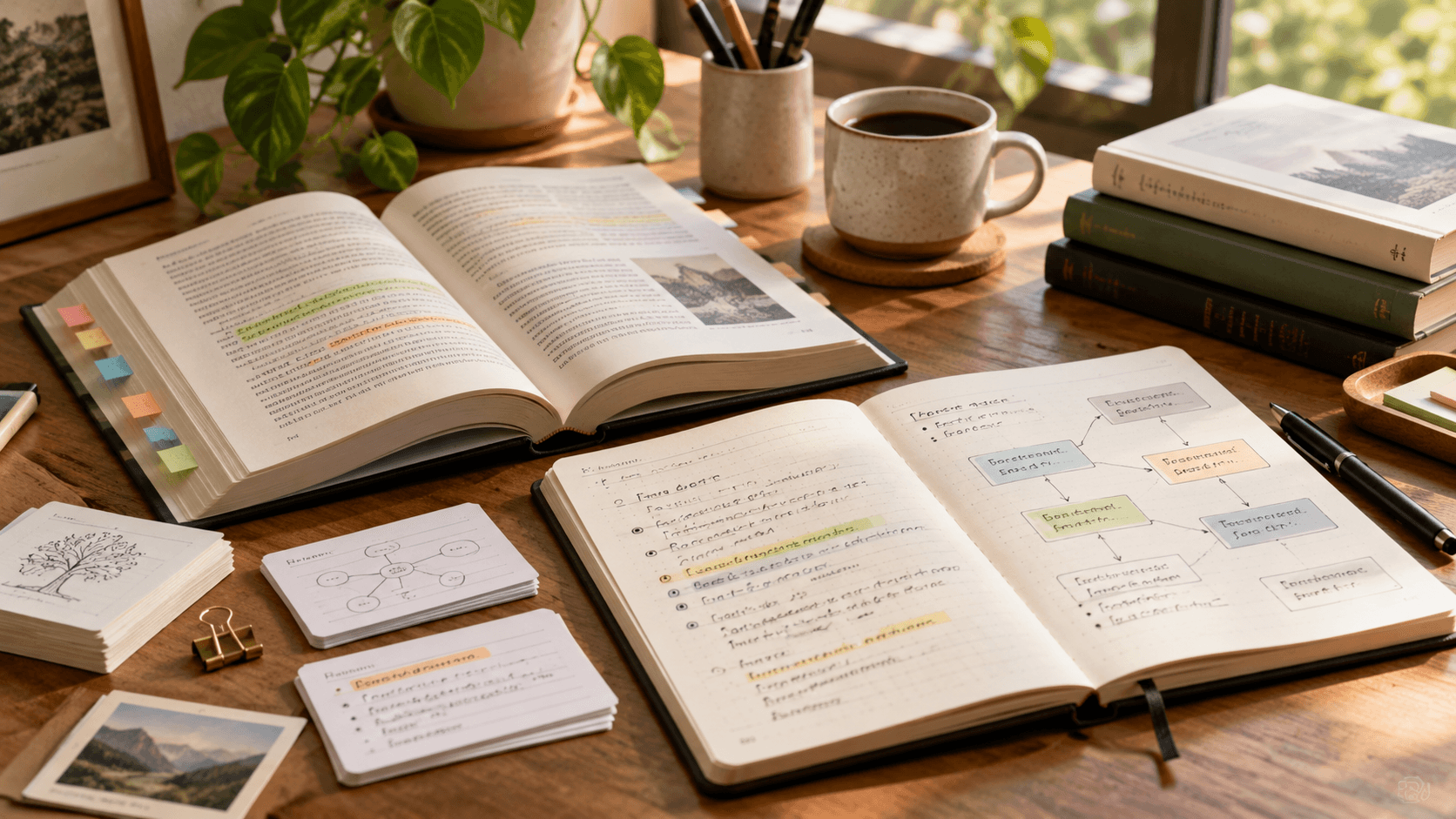
Reading more is not the same as remembering more. A useful reading system helps you choose books with intention, capture only what matters and revisit ideas at the right moment.
How to do it
1. Choose a reason for the book
Before starting, write one sentence about why this book is worth your time now: curiosity, a question, pleasure or a specific problem.
Tip: Different reasons justify different reading speeds.
2. Read with one capture rule
Highlight or note only ideas you would want to explain, use or remember later. Do not turn every page into an archive.
Tip: Scarcity makes notes more meaningful.
3. Write a five-sentence summary
When you finish, describe the book in your own words using five sentences: premise, strongest idea, disagreement, application and who might enjoy it.
Tip: Writing from memory is part of remembering.
4. Create one action or connection
Use one idea, connect it to another book, or discuss it with someone. Memory strengthens when information gains a relationship.
Tip: You do not need ten takeaways; one used idea is enough.
5. Review selectively
Once a month, revisit summaries rather than entire notes. Reopen the full notes only when a summary still feels relevant.
Tip: Your reading archive should reduce retrieval effort, not create more.
Final checklist
- Each book has a reason
- Notes follow one capture rule
- Finished books get a five-sentence summary
- At least one idea is used or connected
- Summaries are reviewed monthly
What you should have at the end
A reading archive small enough to use and rich enough to bring important ideas back when you need them.