How to Learn a New Skill by Building One Small Project
Stop collecting lessons. Use one finished project to turn information into usable skill.

Courses can create the feeling of progress without requiring you to produce anything. A small project reverses that dynamic: you learn only what is needed to make something work, then improve from real feedback.
How to do it
1. Choose an output, not a subject
Instead of 'learn design', choose 'create a one-page event poster'. Instead of 'learn Python', choose 'build a script that renames 100 files'.
Tip: A concrete output gives learning a finish line.
2. Make the project deliberately small
Choose something you can complete in a few sessions. The goal is not to prove mastery; it is to complete the learning loop.
Tip: If the project needs ten features, cut it to three.
3. Learn only when blocked
Start building immediately. When you hit a problem, search for the exact concept needed to continue.
Tip: This turns tutorials into tools instead of destinations.
4. Keep a friction log
Write down every point where you were confused, slow or dependent on copying. These are your real learning gaps.
Tip: Reviewing the friction log is more useful than rewatching an entire course.
5. Finish and explain it
Publish, show or explain what you built to someone else. Explaining the choices exposes what you understand and what you only repeated.
Tip: A finished imperfect project teaches more than an abandoned perfect plan.
Final checklist
- The project has one concrete output
- Scope fits a few sessions
- You learn on demand
- Friction points are recorded
- The project is finished and explained
What you should have at the end
A completed project, a list of real skill gaps and a clear idea of what to practice next.
From our library

João: An Ordinary Man, A Simple Life
A moving literary portrait of an ordinary man whose quiet choices, family bonds, work, and constancy reveal the extraordinary weight of a simple life.

What Remains: A Crossing Toward the Essence That Endures Time
A philosophical journey toward what remains when noise, roles, urgency, and the need for control begin to fall away.
Keep exploring
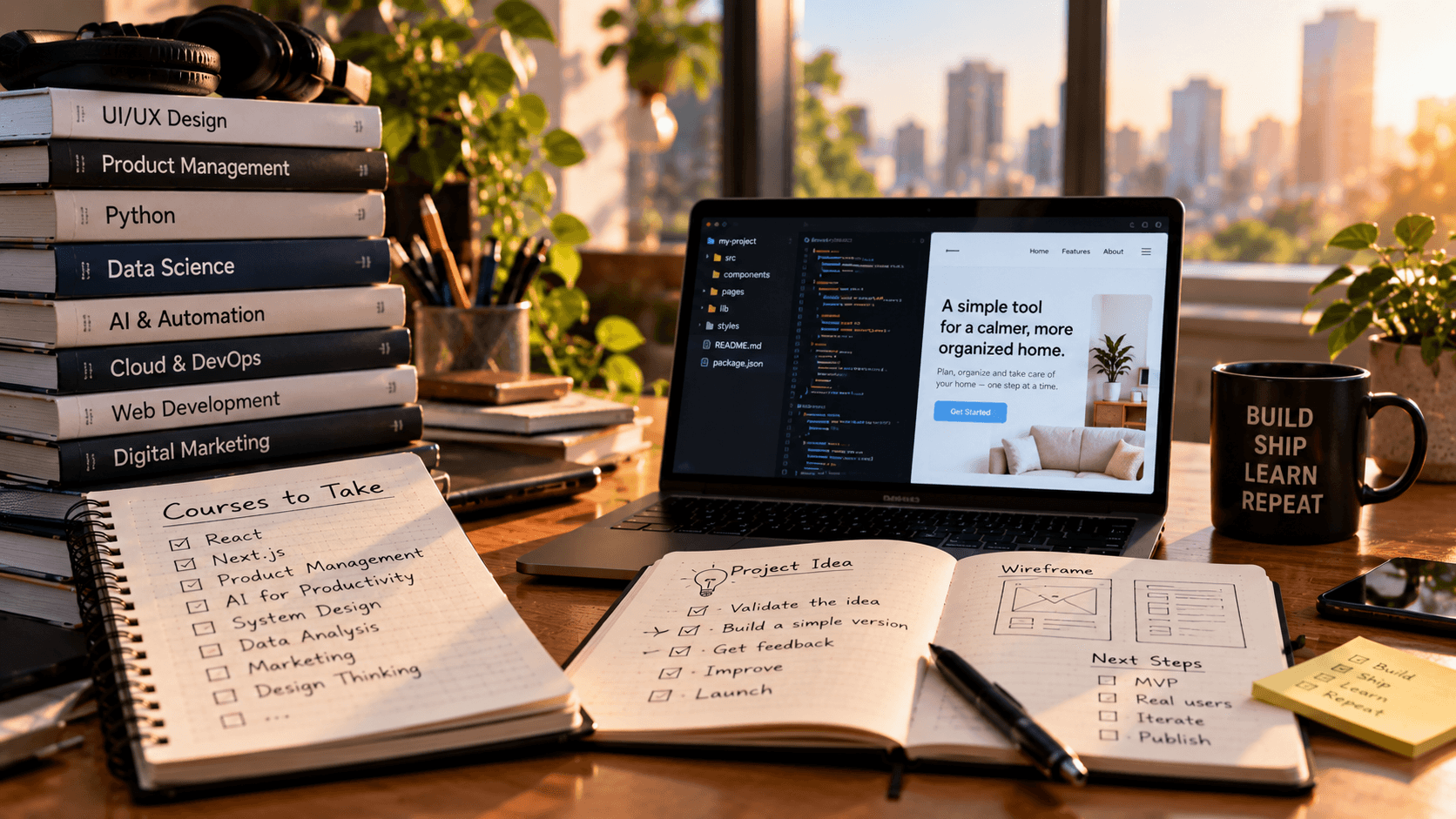
Stop Collecting Courses and Start Building Projects
Learning accelerates when knowledge has somewhere concrete to go.
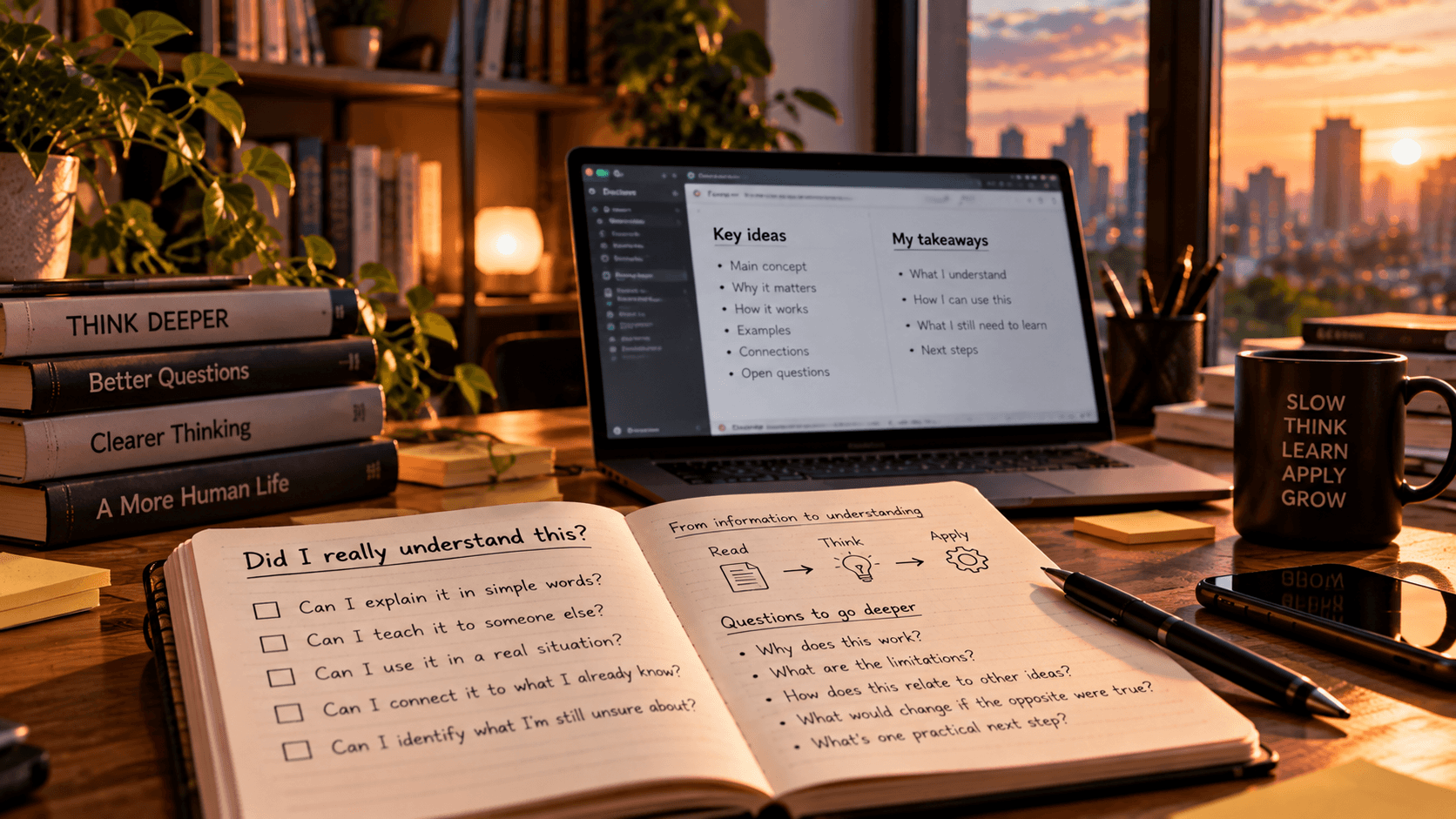
How to Know Whether You Actually Understand Something
Recognition can feel like understanding until you try to explain, apply or challenge an idea.

The Skill of Learning Before You Feel Ready
Waiting for complete readiness can delay learning. A better loop combines foundations, practice, feedback and adjustment.
Related books
João: An Ordinary Man, A Simple Life
A moving literary portrait of an ordinary man whose quiet choices, family bonds, work, and constancy reveal the extraordinary weight of a simple life.
What Remains: A Crossing Toward the Essence That Endures Time
A philosophical journey toward what remains when noise, roles, urgency, and the need for control begin to fall away.