How to Do a 30-Minute Monthly Money Reset
A simple monthly ritual to understand where your money went and what needs to change next.

You do not need a perfect budget to regain visibility over your finances. A short monthly reset can reveal overspending, upcoming obligations and whether your priorities are receiving money in practice.
How to do it
1. Collect the month in one place
Open your main bank account, credit card and any account where meaningful spending happened. Note income, fixed expenses and total variable spending.
Tip: Do not start by judging purchases; start by seeing them.
2. Find the three biggest variable categories
Identify where discretionary money actually went. Restaurants, transport, shopping and subscriptions often tell more than dozens of tiny transactions.
Tip: Focus on categories, not guilt about individual purchases.
3. Check the next 30 days
List bills, annual charges, maintenance, travel or irregular expenses expected next month.
Tip: A budget becomes useful when it includes what is coming, not only what already happened.
4. Choose one adjustment
Decide on one concrete change for next month: a spending cap, automatic transfer, canceled subscription or lower target in one category.
Tip: One visible change is easier to maintain than ten vague intentions.
5. Move money before you forget
Make savings, debt or goal transfers immediately after the review when possible.
Tip: Turning the decision into a transaction closes the loop.
Final checklist
- Income and total spending are visible
- Three major variable categories are identified
- Upcoming irregular expenses are listed
- One adjustment is chosen
- Goal transfers are completed
What you should have at the end
A clear picture of the previous month and one concrete financial action for the next one.
From our library

João: An Ordinary Man, A Simple Life
A moving literary portrait of an ordinary man whose quiet choices, family bonds, work, and constancy reveal the extraordinary weight of a simple life.

What Remains: A Crossing Toward the Essence That Endures Time
A philosophical journey toward what remains when noise, roles, urgency, and the need for control begin to fall away.
Keep exploring

The Lifestyle Upgrade That Quietly Becomes a Monthly Obligation
Lifestyle improvements often arrive one reasonable expense at a time. Understanding recurring commitments can help income growth create more freedom instead of only more obligations.

Earning More Money Does Not Automatically End the Feeling of Not Having Enough
Higher income can improve life dramatically, but it does not automatically define what is enough. Without that definition, every raise can create a new minimum.
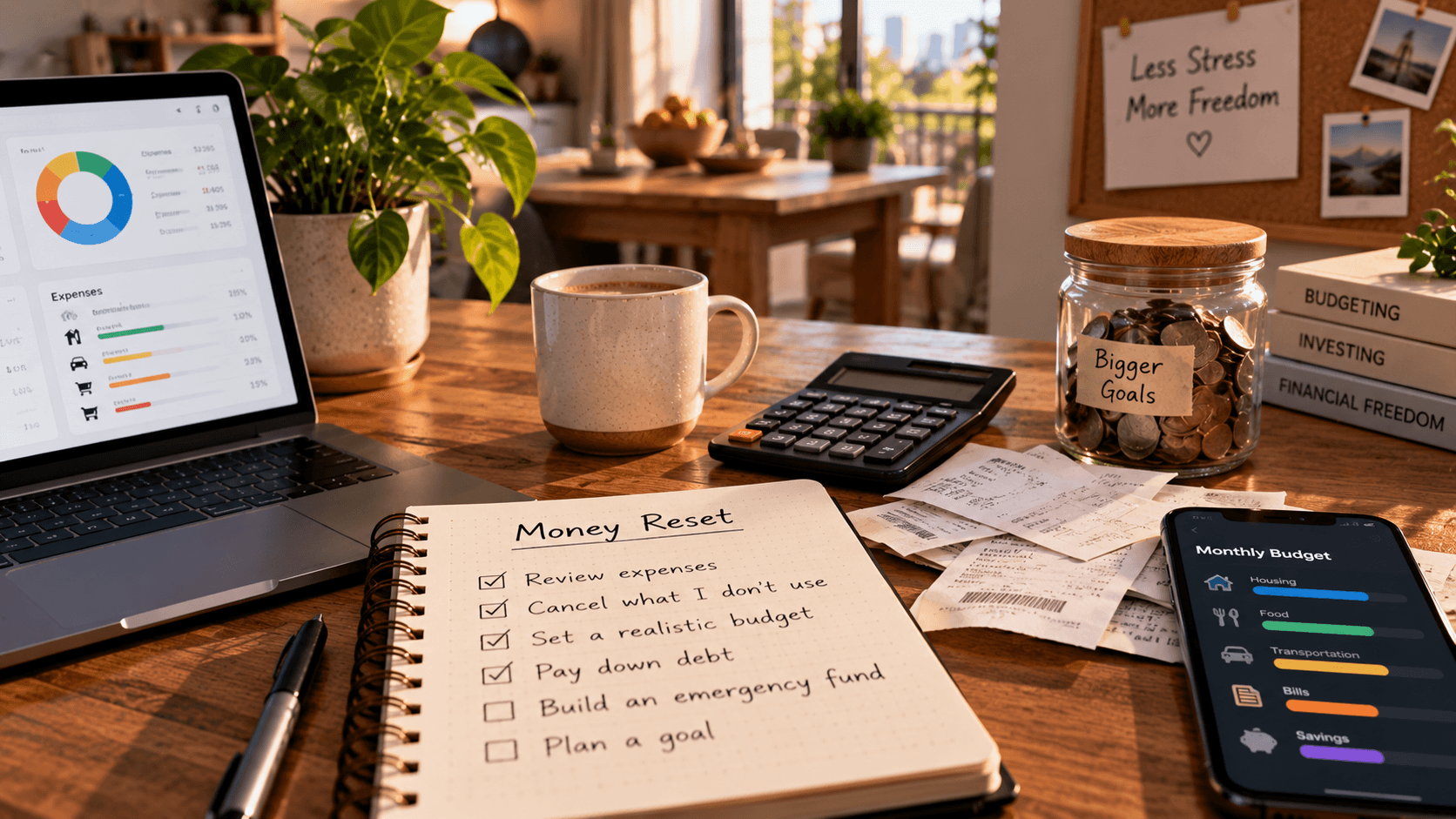
A Simple Money Reset for When Your Finances Feel Messy
A practical five-step reset for regaining visibility over expenses and priorities.
Related books
João: An Ordinary Man, A Simple Life
A moving literary portrait of an ordinary man whose quiet choices, family bonds, work, and constancy reveal the extraordinary weight of a simple life.
What Remains: A Crossing Toward the Essence That Endures Time
A philosophical journey toward what remains when noise, roles, urgency, and the need for control begin to fall away.